
THE CELEBRATION GUIDE
Indian Festive or Formal: What Does the Dress Code Mean?
Decode Indian festive and formal invitations, compare women’s and men’s outfit ideas, and find the right level of dressiness for your celebration.
LOVELEEN SARI PALACE · ARTESIA · SINCE 1990


The invitation says “Indian festive/formal.” You know it is a special occasion—but does that mean a kurta, a sari, a lehenga or a suit? At Loveleen, we start with the invitation and help you compare the options in person.
What does your invitation say?
Use the exact wording as your starting point. These photographed looks illustrate a direction, not a rule or a promise of availability. Bring the invitation and we’ll help you choose.
“Indian festive”
A celebratory look: compare a colourful suit, sari, anarkali or kurta set. Let the event and your comfort guide the level of detail.

“Indian formal”
A dressier finish: compare an embellished sari, lehenga, anarkali or jacketed menswear. Fabric, fit and styling matter as much as the garment name.
“Bollywood chic”
A cue for a lively, dressed-up evening: explore colour, embroidery or sparkle, with room to dance. You don’t need a costume.
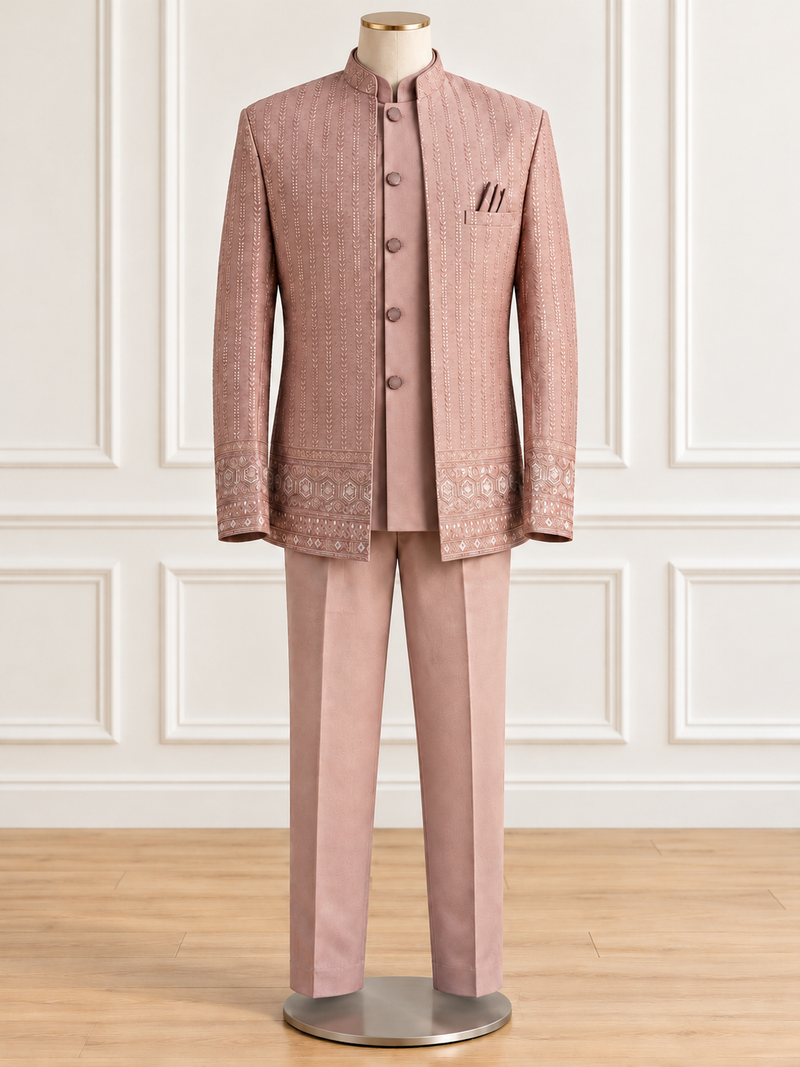
“Indo-Western”
Indian details with a contemporary silhouette. Try a structured jacket or mix an Indian piece with clothes you already own, if it suits the invitation.
“Black tie optional” or “Indian or Western formal”?
Read the whole dress-code line. If Indian formal is explicitly welcome, a dressy Indian outfit is an option; otherwise, follow the stated black-tie instructions. An everyday kurta is not automatically a substitute for requested black tie.
What does “Indian festive” mean?
Think colour, texture and a deliberate celebration look. For women, a coordinated kurta set, salwar kameez, embroidered pant suit or anarkali can be a useful place to start. For men, compare a kurta pajama set, then decide whether a vest or jacket belongs with it.
Festive does not have to mean heavy. A lighter outfit with beautiful detailing can feel celebratory while letting you sit through dinner, greet friends and dance comfortably. Choose the level of embellishment after you understand the party.
What changes when the invitation says “Indian formal”?
We would bring out dressier fabrics, more structured silhouettes or more detailed embroidery for you to compare. Women might try a sari, a dressier anarkali, an embellished suit or a lehenga. Men might try a polished kurta-and-jacket combination or an Indo-Western ensemble.
There is no single garment that automatically makes an outfit formal. The fabric, fit, finish and the way you put the pieces together all matter. A jacketed look can feel quite different from a simple kurta even when both are comfortable to wear.
Colour requests: follow this invitation, not a blanket rule
Hosts may request jewel tones, florals, yellow for a daytime event, or even all-black evening wear. A colour that is discouraged at one ceremony may be requested at another celebration. Read each event’s instructions, including any colours reserved for the couple or wedding party.
If the invitation gives a palette, screenshot it and bring it in. We’ll compare colours together. If it is silent or unclear, ask the hosts about their preferences. Then come in with what you know, and we’ll help you find a starting point.
Check the setting as well as the dress code
“Garden,” “poolside,” “outdoor ceremony” and “dancing” are useful clues. Think about breathable layers, coverage, shoes that suit the ground, and whether you’ll sit, stand or dance for a while. For a religious venue, follow the specific head-covering, clothing and shoe instructions provided.
Ceremony and reception on the same day? Plan a look that works for both.
Three details to check before shopping
- The host’s wording: is there a colour theme, black-tie request or example photograph?
- The setting: a seated evening banquet may call for a different look from an afternoon garden gathering.
- The activities: dinner, dancing and any ceremony affect the shoes, coverage and movement you will want.
A luxury venue or event planner does not establish the dress code by itself. Ask, “Would an embroidered suit or kurta with a jacket be right, or are guests dressing more formally?”
Women: compare festive and formal options
Start with a coordinated suit, then compare dressier silhouettes against the invitation.

Colourful embroidery with a top-and-trouser silhouette.
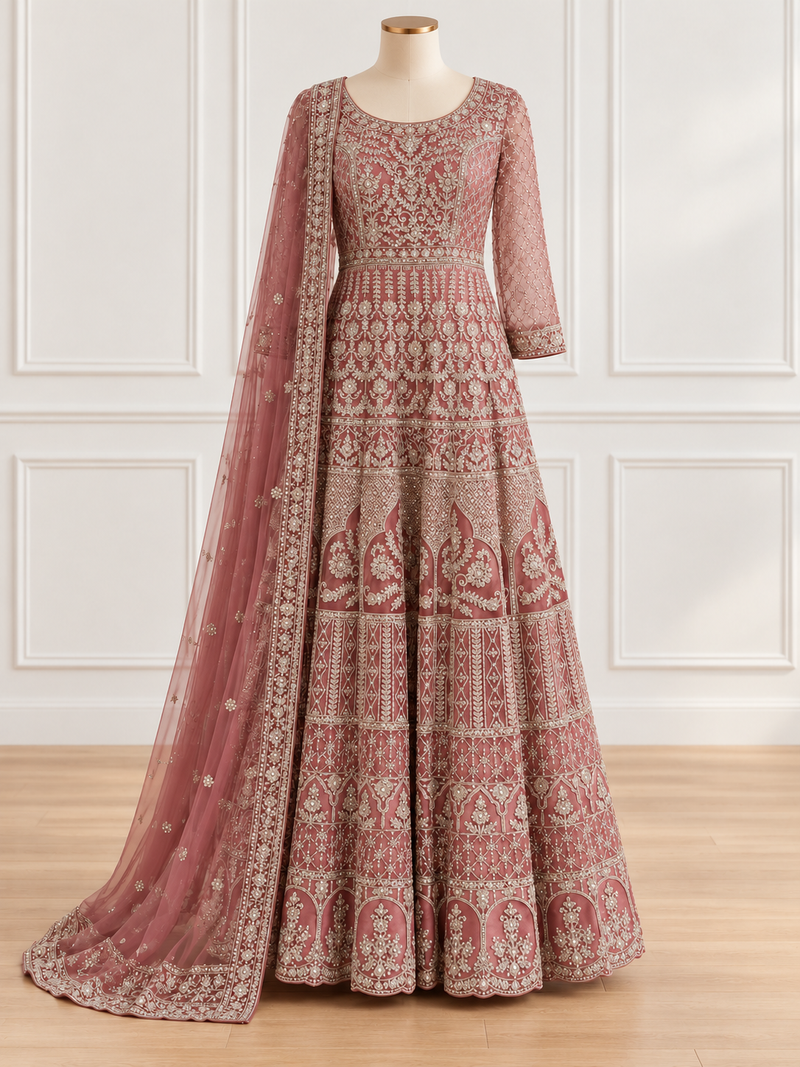
A flowing, dress-like option to try for a dressier evening.

Compare the blouse, drape and overall finish together.

More detailed skirt-and-blouse options for an invitation that calls for dressing up.
Swipe or use the arrows; click a photo to enlarge. Photographed looks are styling examples. Current pieces, sizes and availability vary; shopping is in-store only.
Men: decide whether the kurta needs a vest or jacket
A kurta pajama set is an easy place to begin for Indian festive. For Indian formal, compare it with a vest, a coordinated jacket or a structured Indo-Western look. Bring a photograph of any slacks, button-down or shoes you already own so we can see what might work together.
If the invitation explicitly says black tie, ask the host whether Indian formalwear is welcome as an alternative. We would not assume that an ordinary kurta replaces a requested tuxedo.
Men: compare kurtas and jacketed looks
These examples show different approaches; let the host’s dress code guide the final choice.

A lighter-coloured kurta-and-trouser idea.
Shown beside a coordinated sari for an evening celebration.
A layered option shown in a couple look.
Compare a jacketed silhouette for a more formal invitation.
Swipe or use the arrows; click a photo to enlarge. Photographed looks are styling examples. Current pieces, sizes and availability vary; shopping is in-store only.
Let the outfit work as a whole
Try it with the shoes and accessories you expect to wear. Check the trouser or skirt length, whether the sleeves let you raise your arms and whether the dupatta stays where you want it. You should be able to enjoy the party, not spend the evening adjusting your clothes.
Tell us your budget before trying things on. You may prefer a complete outfit, or you may already have a dress or trousers that work with one new piece. Our mix-and-match outfit guide explains ways to plan for another wear.
Questions we hear in the showroom
Can I wear Indian clothes if I’m not Indian?
Yes—when they fit your host’s wishes, Indian clothes can be a lovely way to join the celebration. Ask about any particular style or colour guidance, and we can help you learn how the pieces go together.
Do Indian festive and Indian formal mean the same thing?
They can overlap, but we would not treat them as identical instructions. Festive can be lighter; formal suggests a dressier finish. When the invitation combines them, ask the host for an example.
Do I need bridal clothing for a formal Indian party?
No. A formal guest outfit does not need to be bridal. Compare the invitation with the outfit’s embellishment, silhouette and accessories rather than choosing the heaviest piece.
Plan the rest of your celebration look
Bring the invitation. Try a few looks.
Visit Loveleen Sari Palace, 18507 Pioneer Blvd, Artesia, CA 90701. We’ll help you compare outfits for your invitation, your comfort and your budget. Bring photos of anything you hope to wear with them, plus your event shoes if you have them.
Shopping is in-store only. Walk-ins are welcome, and there’s free rear-lot parking. If alterations are needed, we’ll confirm the separate cost and timing before you decide.
Book a showroom visit →