
THE WEDDING GUIDE
Indian outfits with more coverage
You can wear Indian wedding clothing without showing your stomach.
LOVELEEN SARI PALACE · ARTESIA · SINCE 1990
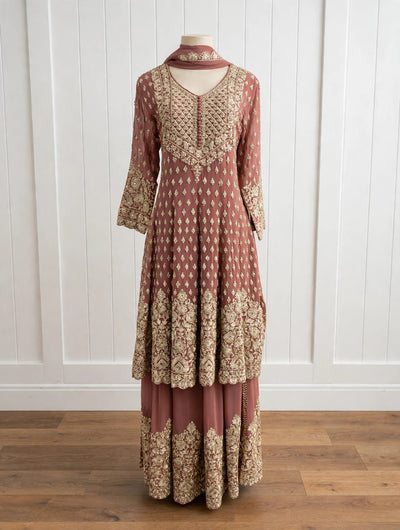


You don’t need a cropped blouse to look festive. If you would rather keep your stomach covered, start with an anarkali, a longer-top suit or a salwar kameez. You can also choose sleeves, a higher neckline or a covered back—your comfort is a good enough reason.
Explore outfits with more coverage
Longer tops and sleeves can be a helpful starting point. Try the outfit on to check the neckline, back, and lining.


Swipe or use the arrows. Coverage depends on the actual garment and fit; available styles and sizes vary.
Whether you call it modest Indian clothing or simply want a little more coverage, your preference is enough. You do not need to explain why.
Can I wear Indian wedding clothes without showing my stomach?
Absolutely. Choose a top that covers your waist on its own, rather than relying on a dupatta to stay in place. Try sitting, reaching and walking in the actual outfit to make sure the top and waistband stay comfortably covered. We’ll help you compare options in the fitting room.
Start with a longer top and trousers
A pant suit or salwar kameez pairs a longer top with trousers. It is a useful starting point if you want your waist covered while sitting, standing, and moving around. A sharara set pairs a top with flared trousers; choose a top length that gives you the coverage you want.
An anarkali offers a flowing dress-style shape, often worn with leggings or trousers. These outfit names describe broad categories, not guaranteed coverage. Check the neckline, sleeves, lining, and back of the actual garment.
You can still choose a lehenga or sari
If you love a skirt-and-top lehenga, look at how the blouse and waistband meet. A longer blouse or a different top style may offer the look you want, depending on what is available and how the pieces fit together.
A sari can be arranged for coverage, but the blouse and drape both matter. If you prefer an outfit that covers you without needing to adjust fabric, begin with a longer-top set. Read our easy-to-wear Indian clothing guide for options that go on like familiar clothes.
Choose the coverage that matters to you
- Waist: check that the top covers the waistband when you reach and sit.
- Arms: look for your preferred sleeve length, and check whether the sleeves are opaque or sheer.
- Neckline: lean forward gently to check how it sits.
- Back: look at the back neckline, cut-outs, and fastening placement.
- Legs and lining: check slits and sheer panels as well as the garment’s overall length.
“Long sleeves” does not always mean opaque sleeves. “Long top” does not always mean a covered waist in every position. Trying the outfit on helps you judge the details that a photograph can miss.
A dupatta can add coverage, but it should not do all the work
A dupatta is the scarf included with many women’s sets. It can be arranged across the chest, over the shoulders, or used as a head covering when the ceremony requires one.
If you want coverage throughout a long event, choose a base outfit you feel comfortable in first. Then use the dupatta as part of the styling, rather than depending on it to stay in one exact position all day.
Consider the ceremony as well as your preferences
Coverage expectations vary by family, venue, and religious setting. Check the invitation or ask your host about any specific requirements. Personal coverage preferences and a ceremony’s dress code may overlap, but they are not always the same.
For ceremony-specific help, see our Sikh wedding guest guide and Muslim wedding guest guide. For Diwali, a covered-waist pant suit or sharara set can still feel colourful and festive; our Diwali guide helps explain the occasion.
Travelling for the celebration? Our packing-light wedding guide helps you plan outfits and accessories around the events on your invitation.
What should I ask about before travelling for a specific outfit?
Be specific about what you need: opaque sleeves to the wrist, a higher neckline, a covered back, a top that covers your waist while seated, or a non-sheer dupatta. Include your size, event date and any written dress instructions when you message us.
We can clarify current options before your trip. Photos are a starting point; try on in store to check the actual lining, coverage and movement. Don’t assume adding a lining or changing a sleeve is possible for every garment—confirm any alteration options, separate cost and timing first.
What can a hijabi guest wear to a Bengali wedding without a sari?
A longer-top trouser suit, anarkali or sharara set can be a useful place to start when you want a festive outfit without draping a sari. Choose the silhouette you like, then check the actual garment against your own coverage preferences. “Long sleeves” may still mean sheer sleeves, and a long top can have side slits or an open back.
Bengali refers to a cultural and language background; it does not identify the wedding’s religion or dress code. For a Bangladeshi celebration, our Bangladeshi wedding guest guide offers related questions. Ask your hosts about the particular ceremony, venue and reception rather than assuming every Bengali wedding has the same expectations.
How do I choose a modern outfit with the coverage I want?
Try a coordinated pant suit or a flowing anarkali in a colour you enjoy. Check sleeves to your preferred length, a secure neckline, back coverage, opaque lining and how the top sits when seated. Embroidery or jewellery can make a covered silhouette feel dressed for a celebration without needing a cropped top.
Can I coordinate my hijab with the outfit?
Bring your preferred hijab, undercap or reference colour to the fitting. Compare it with the outfit and test the complete neckline and shoulder arrangement while sitting and moving. A set’s dupatta may be sheer, narrow or slippery; do not assume it will provide the coverage or security you prefer. Ask which pieces are included and what you would need separately.
What about a gaye holud, nikah or reception?
Use the events actually listed on your invitation. If a gaye holud is included, ask about a colour theme and whether you will be near turmeric. If there is a nikah, confirm the setting and any venue requirements. For the reception, follow its stated formality. You can keep the same personal coverage preferences across all events while changing the fabric weight, colour or level of embellishment.
Can you guarantee an outfit is hijab-friendly from a photograph?
A photograph cannot confirm every lining, slit, sleeve or fastening. Tell us exactly what you want covered and try the outfit on in store. Stock varies, and any lining or sleeve alterations need separate confirmation of feasibility, cost and timing before purchase.
Coverage should feel comfortable in motion
Before choosing, sit, walk, raise your arms, and try the dupatta arrangement. Check that sleeves allow you to move and that the neckline and top length stay comfortable. If you are shorter, our petite Indian wedding outfit guide covers proportions and hems.
Come try on the outfits
Come try on styles with the coverage you feel comfortable in. Tell us what you’d like covered, then compare a few options in our Artesia fitting rooms. We’ll help you check sleeves, necklines, and waist coverage while you sit and move. Walk-ins welcome.